
National Sea Rescue Institute (NSRI)
The National Sea Rescue Institute (NSRI) is a non-profit organization that serves as the backbone of maritime safety in South Africa. Run almost entirely by dedicated volunteers, it is the coastal equivalent of a volunteer fire department, operating 24/7 to save lives on both inland and coastal waters.
Here is an overview of what makes the NSRI a vital institution.
1. The Mission: Saving Lives
The primary goal of the NSRI is to prevent drowning through rescue operations, education, and safety initiatives. Unlike many search and rescue services globally, the NSRI is not funded by the government; it relies on donations and sponsorships to maintain its fleet and training programs.
2. A Volunteer-Driven Force
The heart of the NSRI is its network of over 1,500 volunteers stationed at more than 50 rescue bases across South Africa. These men and women are on call 365 days a year. When a distress call comes in—whether it’s a sinking vessel, a stranded swimmer, or a medical emergency at sea—these volunteers leave their jobs and families to head into the water.
Specialized Rescue Services:
-
Deep-Sea Rescue: Utilizing large, all-weather rescue craft for long-range missions.
-
Inshore Rescue: High-speed inflatables (RIBs) for surf zone and rocky coastline operations.
-
Air-Sea Rescue: Collaborating with helicopter units for hoist-based extractions.
-
Swift Water Rescue: Responding to flooding and river emergencies.
3. Prevention and Education
The NSRI believes that the best rescue is the one that never has to happen. They have a massive focus on Water Safety Education, particularly in underprivileged communities.
-
Pink Rescue Buoys: You’ve likely seen these bright pink buoys at South African beaches. They are emergency flotation devices placed at high-risk spots to help bystanders assist someone in trouble while waiting for rescuers.
-
Survival Swimming: Programs designed to teach children the basic skills needed to stay afloat and reach safety if they fall into water unexpectedly.
4. Technology and the Fleet
To operate in the "Cape of Storms," the NSRI maintains a world-class fleet. In recent years, they have transitioned to locally built ORC (Offshore Rescue Craft). These vessels are "self-righting," meaning if they are capsized by a massive wave, they are designed to roll back upright automatically.
5. How You Can Help
Because the NSRI is a charity, public support is their lifeblood. People contribute by:
-
Donations: Direct financial support for fuel, gear, and maintenance.
-
The NSRI Car Competition: A popular annual lucky draw.
-
Downloading the RSA SafeTrx App: A tracking app for paddlers and sailors that alerts the NSRI if you fail to return from your trip on time.
Summary Table
| Feature | Detail |
| Founded | 1967 |
| Status | Non-profit (NPO) |
| Primary Region | South Africa |
| Force | 98% Volunteer based |
| Emergency Number | 112 (from mobile) or local base numbers |
The NSRI represents the best of the human spirit—volunteers risking their lives to save strangers in some of the most treacherous ocean conditions on Earth.
No photos available
Other Contents
2026-02-20
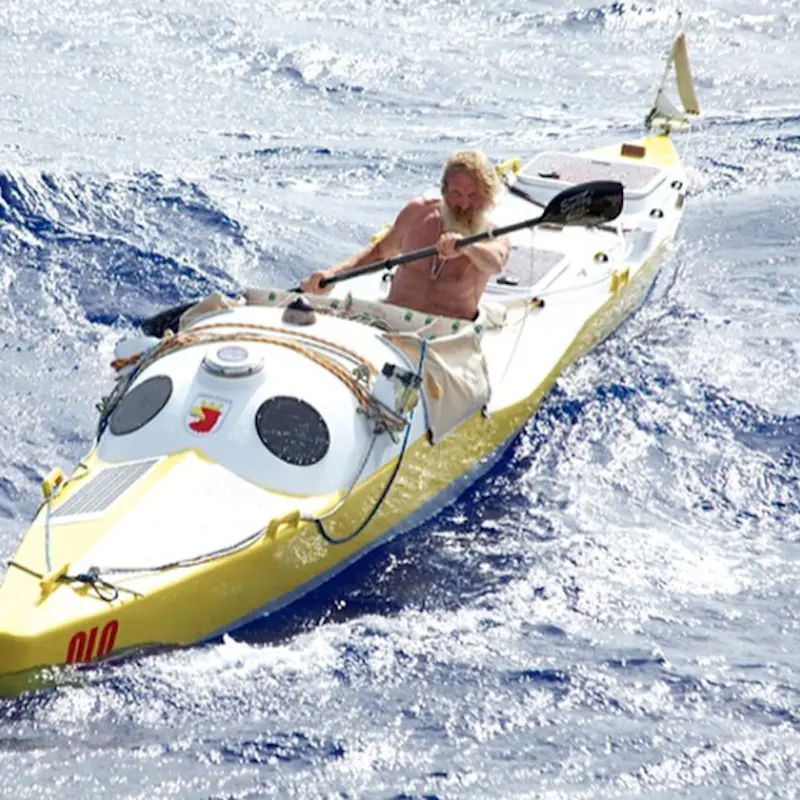
Aleksander "Olek" Doba
Aleksander "Olek" Doba (1946–2021) was a legendary Polish adventurer who became the first person to kayak across the Atlantic Ocean solo and unaided by sails, relying entirely on muscle power. He completed this feat three times, all after the age of 60. >>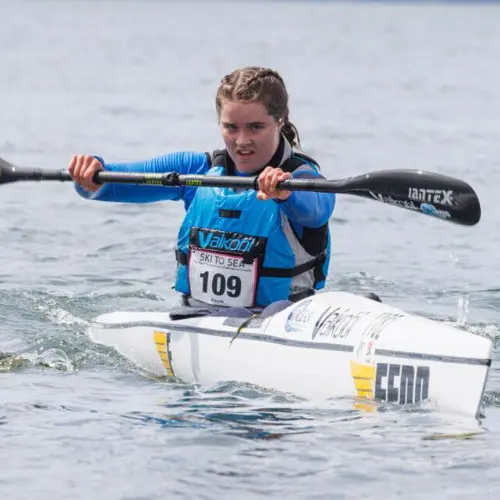
2026-02-20
Ana Swetish
Ana Swetish is the breakout star of American surfski racing and is widely considered one of the best technical downwind paddlers in the world today. Based in Bellingham, Washington. >>
2026-02-13